
Menu
Ease Your Nursing Academic Journey with Nursing Whispers. Get custom Assignments, Homework, Research Papers and Classes done at competitive Prices. We'll do the Heavy-Lifting.
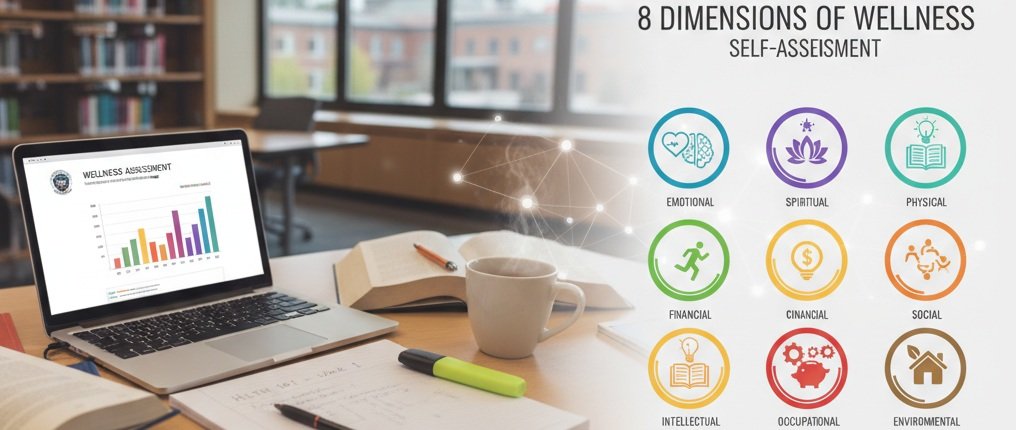
Chapter 1: Learn more about the Dimensions of Wellness by taking our first self-assessment.
To help make the information in Chapter 1 more personal and relevant to you, pull up the “personal-assessment 8 dimensions of wellness” attached to this assignment.
After you complete the self-assessment, reflect on your results. Fill in the table below and answer the following questions for the HLTH 101 assgnment:
| Wellness Dimension | Maximum Score | My Score |
| Emotional Wellness | 40 | 42 |
| Spiritual Wellness | 40 | 25 |
| Physical Wellness | 40 | 34 |
| Social Wellness | 40 | 35 |
| Financial Wellness | 40 | 23 |
| Occupational | 40 | 31 |
| Intellectual Wellness | 40 | 40 |
| Environmental Wellness | 40 | 29 |
Table: 2 points + 2 pts per response.
1) Considering the dimensions of wellness we learned about in the textbook (Figure 1.1), which dimensions of wellness were your strongest? Do any of your results surprise you? Why or why not – I am seen as strongest emotional which am not at all surprise, I tend to be emotional most times.
2) Choose one of the dimensions of wellness you scored lower in. What kinds of activities do you think you might do to improve in this area? Where at Minnesota State University might you find help, support, or guidance with this? I am seen most weak in Financial, I do think this is an area I need to work on, I think my advisor would be able to guide me where I can get help on this.
3) What are 2 consequences of not improving this dimension that might happen within the next ten years or less of your life? Failure to improve my financial wellness can lead to financial instability and stress, negatively impacting mental and physical health, relationships, and overall well-being within the next ten years or less. Additionally, poor financial wellness can limit access to financial opportunities, such as investing, retirement planning, or purchasing a home, reducing financial security and making it challenging to achieve long-term financial goals, potentially within5-10 years.
4) We learned in HLTH 101 Chapter 1 that the dimensions of wellness are interconnected. If you are successful in improving this dimension of wellness, how might it affect the other dimensions in a positive way? What are potential benefits to improving in a dimension? Please give two concrete examples of how the dimensions are connected. Improving one dimension of wellness can have a positive ripple effect on others. For instance, enhancing physical wellness through exercise and healthy eating can boost mental wellness by reducing stress and anxiety. Similarly, improving emotional wellness through mindfulness and self-awareness can positively impact social wellness by fostering healthier relationships and effective communication. By improving one dimension, you may experience increased energy, better relationships, improved mental clarity, and enhanced overall well-being, highlighting the interconnectedness of the wellness dimensions.
HLTH 101: Week 1 Weekly Assignment Instructions | |
| For the second half of your HLTH 101 weekly assignment, use your response from the MindTap Self-Assessment to answer the following questions in a text submission. I am looking for mindfulness and depth of thought. This should be written in sentence format with separate answers for each prompt. I want you to identify a specific action – such as meditate, draw, or re-connect with a friend you’ve lost touch with. This can also be a challenging transition in family dynamic as you become more independent. 1) How did you do, generally? Is this what you expected – do you think it’s an accurate for you? Why or why not? (1 pt) 2) SHORT-TERM – What are some things you might do right now to improve your perceptions and reactions to stressors? Be specific. Even if you scored very low, everyone can think of some basic things to improve. (2 pts) 3) LONG-TERM – What are some things you could do in the next year (long term) to improve your perceptions and reactions to stressors? Think about major life events that are coming up, and what you might need to be able to do to offset anxiety-producing circumstances. (2 pts) |
Resources